M.Phil Islamic Studies
The M.Phil program of the Department of Islamic Studies and Comparative Religion is a research-based postgraduate degree aimed at cultivating critical thinking, intellectual development, and specialized knowledge. It is aligned with HEC guidelines and designed to foster meaningful contributions to academic research and societal development.
Program Structure
At the postgraduate level, the department offers research-based degree programs aimed at cultivating critical thinking, intellectual development, and specialized knowledge. M.Phil scholars are required to complete 24 credit hours of coursework and a 9-credit hour thesis. These programs are aligned with HEC guidelines and designed to foster meaningful contributions to academic research and societal development.
The academic foundation builds on traditional Islamic disciplines such as Tafseer, Hadith, Seerah, Islamic Jurisprudence, Usul al-Fiqh, Qawaid al-Fiqh, Mysticism, and Arabic literature, with engagement in contemporary fields including Islamic Banking, Sociology, Comparative Religions, and Ethics.
Learning Outcomes
The department aims to produce graduates who possess in-depth knowledge of Islamic teachings and are capable of applying them to modern-day issues. Students are trained to conduct academic research, engage with diverse perspectives, and provide solutions to societal challenges through the lens of Islamic principles. The curriculum emphasizes moral character, critical thinking, and ethical responsibility.
Furthermore, the program fosters interfaith understanding, social harmony, and intellectual engagement. Graduates are equipped to contribute positively to society by embodying values of tolerance, justice, and peace.
Career Pathways
Graduates of the Department of Islamic and Comparative Religious Studies have diverse and promising career prospects. They can serve as researchers, educators, religious scholars, consultants, and advisors in universities, religious institutions, think tanks, NGOs, and government departments. Additionally, their expertise in contemporary Islamic issues positions them for roles in Islamic banking, interfaith dialogue, ethical consultancy, and media. The department’s interdisciplinary approach also opens doors for collaborative work in human and medical sciences, both nationally and internationally.
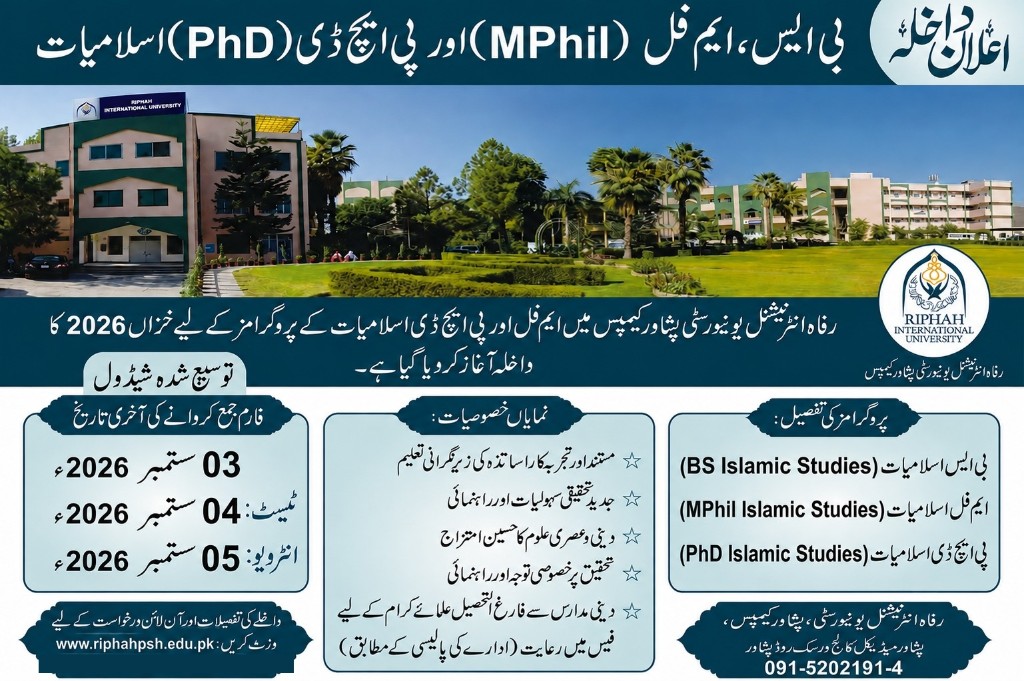
Fall 2026 admissions — extended schedule
Apply by 03 Sep 2026. Test: 04 Sep 2026. Interview: 05 Sep 2026.
Admission Form Advertisement